

Your July 2026 ITR Was Filed Under the Old Act. Here’s What ChatGPT for Income Tax Act 2025 Actually Gets Right — and the One Mix-Up Almost Everyone Makes.
The new Income-tax Act, 2025 has been in force since 1 April 2026, and it’s already causing a specific, predictable kind of confusion. Here’s the real transition, and where ChatGPT genuinely helps navigate it without making the confusion worse.
The Income-tax Act, 2025 replaced the six-decade-old Act of 1961 from 1 April 2026. That much most people have heard. What trips practitioners and business owners up is the timing. If you filed an income tax return in July 2026 for FY 2025-26, that return was filed under the old 1961 Act — the new Act only governs Tax Year 2026-27 onward, which is the financial year we’re actually in right now. Plenty of confused clients, and more than a few confused colleagues, have assumed otherwise.
This is where ChatGPT for income tax transition work genuinely earns its place. Not by telling you what the law says — that’s exactly the kind of thing it can get wrong. It helps by mapping old references to new ones, drafting client explanations, and organising the transition, while every actual legal conclusion stays with a person who’s checked the primary text.
📑 Table of Contents
- 01What actually changed, and what didn’t
- 02The AI-assisted transition workflow
- 03Step 1 — Map old section references to new ones
- 04Step 2 — Draft the client explainer
- 05Step 3 — Flag documents still citing the old Act
- 06Step 4 — Build the Tax Year 2026-27 checklist
- 07Where this goes wrong
- 08A worked example
- 09FAQ
- The Income-tax Act, 2025 has been in force since 1 April 2026 and applies from Tax Year 2026-27 onward — not to returns already filed for FY 2025-26.
- It’s a structural and language simplification, not a policy change — tax rates, slabs, and major deductions are unchanged.
- ChatGPT for Income Tax Act 2025 work is genuinely useful for mapping section references and drafting explanations — never as the final word on what a specific provision now says.
- “Tax Year” has replaced “Assessment Year” and “Previous Year” as a single, simpler 12-month concept — a small terminology shift that trips people up disproportionately.
What actually changed, and what didn’t
The new Act reorganises the law into 536 sections across 23 chapters, down from the 700-plus sections and endless provisos the 1961 Act had accumulated over sixty years. Over 1,200 redundant provisos and 900-plus explanations were consolidated or removed. TDS provisions, which used to be scattered across dozens of sections, now sit consolidated under a single Section 393.
The bigger conceptual shift is “Tax Year” replacing both “Assessment Year” and “Previous Year” — a single 12-month period starting 1 April, instead of the two-year dance the old terminology required. It sounds small. In practice, it’s the detail that causes the most confusion in day-to-day drafting and client conversations, because everyone’s used to saying “AY” and “PY” out of habit.
What genuinely hasn’t changed: tax rates, slabs, and the major deductions. Section 80C-style investment deductions, health insurance premium deductions, and home loan interest deductions under the old regime are all still available in substance. They’ve just been renumbered and reworded as part of the same restructuring. This is a language and structure simplification. It was explicitly not meant to change underlying tax policy.
Pro tip
Anywhere you see an old section number cited — in a contract, a prior year’s tax opinion, a client’s own notes — resist the urge to assume it’s now wrong. Prior years’ assessments and documents remain governed by the Act that was in force when they were made. The new Act applies going forward, not retroactively.
The AI-assisted transition workflow
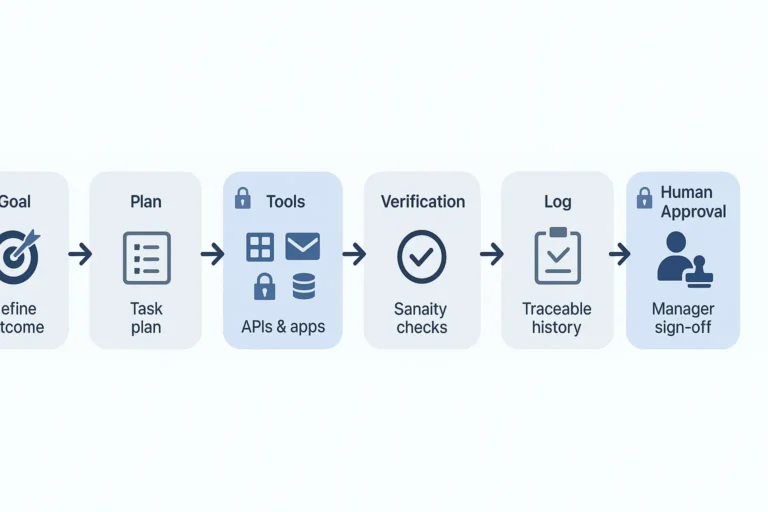
Four steps: map old section references to their new equivalents, draft a client explainer that doesn’t cause unnecessary panic, flag documents still citing outdated provisions, and build a checklist for the new Tax Year. AI drafts and organises at every step. It never gets the final say on what a specific new section actually means.
Step 1 — Map old section references to new ones
Looking up which new section a familiar old one corresponds to, one reference at a time, across a client’s documents or your own working papers, is slow and easy to do inconsistently.
Where ChatGPT helpsI ask ChatGPT to propose the likely new section for a given old reference, treating every answer as a hypothesis to check against the official section-mapping table, never as confirmed.
The promptCHECK
REQ’D
What I still check by hand
Section mapping is exactly the kind of specific, checkable fact AI can get confidently wrong. Every suggested mapping gets verified against the official CBDT section-mapping circular before it goes into any client-facing document — no exceptions, regardless of how confident the answer sounded.
Step 2 — Draft the client explainer
Explaining a legislative restructuring to a client without a tax background, without either alarming them or glossing over what genuinely matters, takes careful drafting every time.
What changesWith the facts already confirmed, I ask ChatGPT to draft a short, reassuring explainer that gets the “what changed vs. what didn’t” balance right.
What I send itStep 3 — Flag documents still citing the old Act
Scanning through contracts, board resolutions, and old tax opinions for section references that a reader might now mistake as outdated takes a careful read-through, line by line.
Handing it to ChatGPTI paste the relevant text and ask ChatGPT to flag every section reference so I can decide, case by case, whether a clarifying footnote is worth adding.
Here’s the askStep 4 — Build the Tax Year 2026-27 checklist
Putting together a practical checklist for this first Tax Year under the new Act — new forms, new terminology, new section numbers to reference — takes real organising work.
With AIOnce I’ve confirmed the specific changes relevant to a client, I ask ChatGPT to turn them into a clean, dated checklist.
Word for word
Where this goes wrong
Three mistakes show up often enough to name directly. Assuming July 2026 ITR filings used the new Act. They didn’t — FY 2025-26 returns were filed under the 1961 Act regardless of when they were actually submitted. Treating the restructuring as a policy change. Tax rates, slabs, and major deductions are unchanged; panicking a client about “new tax rules” that don’t actually affect their tax bill helps no one. Trusting AI’s section-mapping without checking the official circular. A confidently stated wrong section number in a client document is exactly the kind of small, quiet error that’s hard to trace back later.
A worked example
A client’s standard vendor contract template included a TDS clause citing “Section 194J of the Income-tax Act, 1961” — standard language, used in every contract the company issued for years. With the new Act in force, someone flagged it as “probably wrong now” and wanted it rewritten across every active contract.
Step 3’s scan confirmed the reference existed in twelve active contracts. But the actual answer was more nuanced than a blanket rewrite: contracts signed and governed under the old Act remain valid as written, since the new Act isn’t retroactive. What genuinely needed updating was the company’s contract *template* going forward, to reference TDS provisions under the new Act’s consolidated Section 393 instead — new contracts, not existing ones. Twelve contracts stayed exactly as signed. One template got updated for everything issued from that point on.
The Structure Changed. The Judgement Calls Didn’t.
ChatGPT for Income Tax Act 2025 work is genuinely useful for exactly what this transition needs most right now — mapping references, drafting explanations, organising the checklist. It has no business being the final word on what a specific new section says, or which of a client’s old documents actually need changing. That distinction is where the real risk sits during any legislative transition, and it hasn’t moved just because the section numbers have.





One Comment