
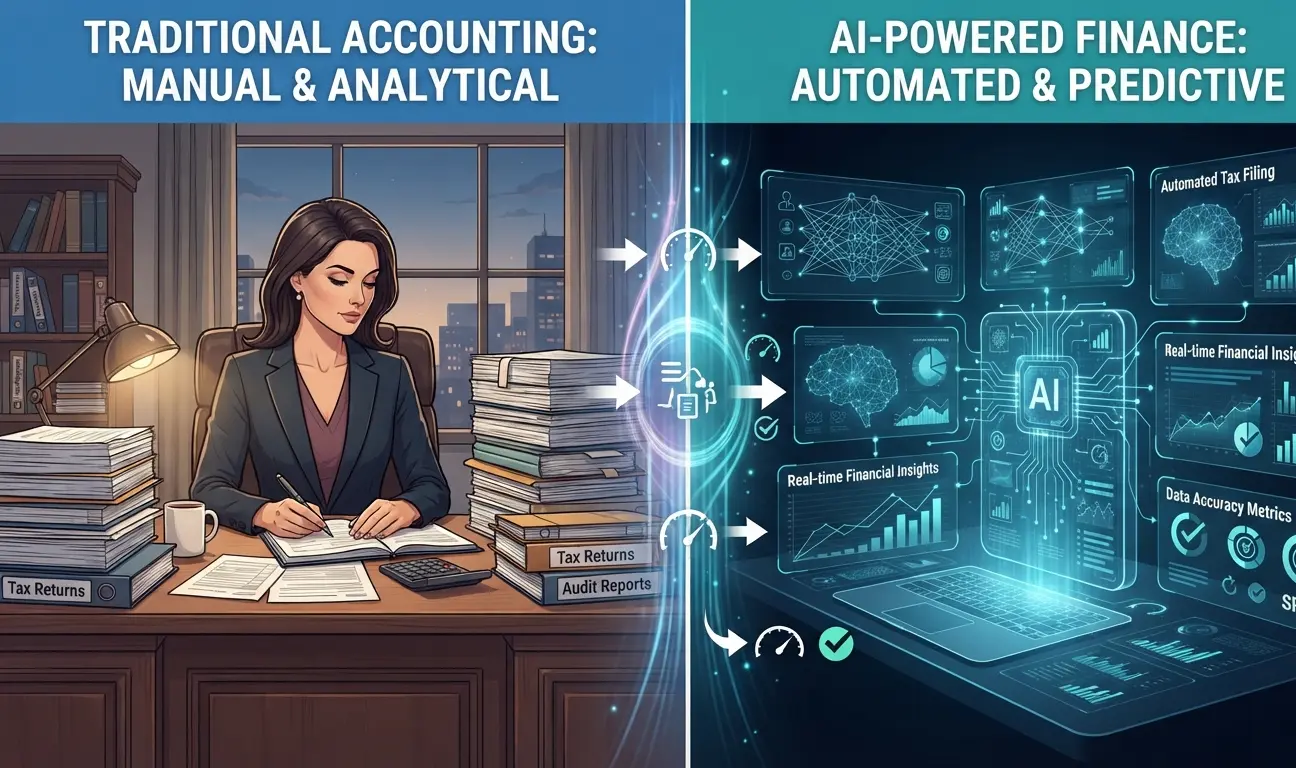
Can AI Replace a CA? It Already Replaced Half of What I Used to Do — and Made Me More Valuable.
After 13 years in financial reporting, audit, and FP&A, I’ve watched AI quietly take over a real chunk of the work I once billed hours for. Here’s the honest answer to the question every CA is quietly asking — without the fear, and without the hype.
Can AI replace a CA? The question is usually asked in one of two tones — anxious, by professionals worried about their livelihood, or triumphant, by people who’ve never had to sign an audit report. Both miss the same point. The question treats “a CA” as a single thing that either survives or doesn’t, when the reality is that a Chartered Accountant’s work is a bundle of very different tasks — some of which AI does better than me already, and some of which it structurally cannot do at all. The useful question isn’t whether AI replaces the CA. It’s which parts of the job it takes, and what that leaves you free to do.
This is a practitioner’s honest view after 13 years — not a defence of the profession, and not a prediction of its doom. Just a clear-eyed look at what actually gets automated, what doesn’t, and why the CAs who thrive over the next decade will be the ones who understand the difference.
📑 Table of Contents
- AI replaces tasks, not roles. It has genuinely taken over data entry, first-pass reconciliation, and routine drafting.
- It cannot replace the core of the profession: professional judgement, legal accountability, and the signature that carries them.
- The result is a shift in what CAs do — from compliance and data work toward advisory, interpretation, and judgement.
- The CAs at risk aren’t those who use AI — they’re those whose entire practice is built on the tasks AI now does faster.
Why “replace” is the wrong word
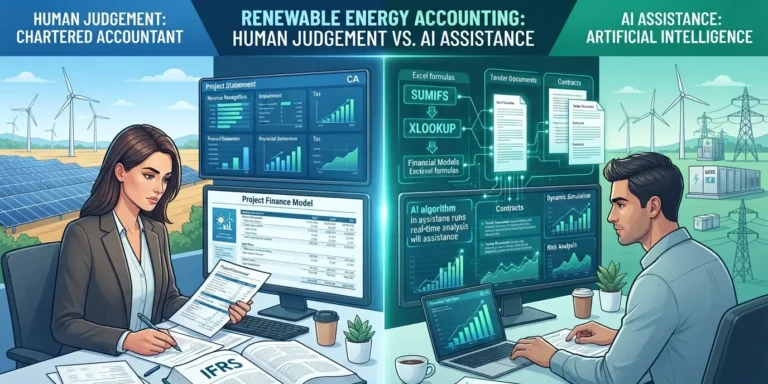
The word “replace” assumes the job is one indivisible thing. It isn’t. On any given week I might do bookkeeping-adjacent reconciliation, draft a set of financial statements, interpret an ambiguous tax provision, advise a promoter on a funding decision, and sign off on an audit. Those are five completely different kinds of work, and AI’s ability to do them ranges from “better than me and faster” to “cannot legally or practically do it at all.” Asking whether AI replaces “a CA” flattens that range into a yes/no that can’t be answered honestly. The better question — the one this article answers — is task by task.
It’s worth naming why the question keeps coming back. Every wave of headlines asking “will AI replace accountants” frames AI in the accounting profession as an external threat arriving to take jobs, when what’s actually happening is quieter and more specific: AI is redistributing work inside the profession, not removing the profession. Understanding that distinction is the whole difference between reacting with fear and responding with strategy.

What AI Genuinely Automates (and Why It Can’t Replace a CA)
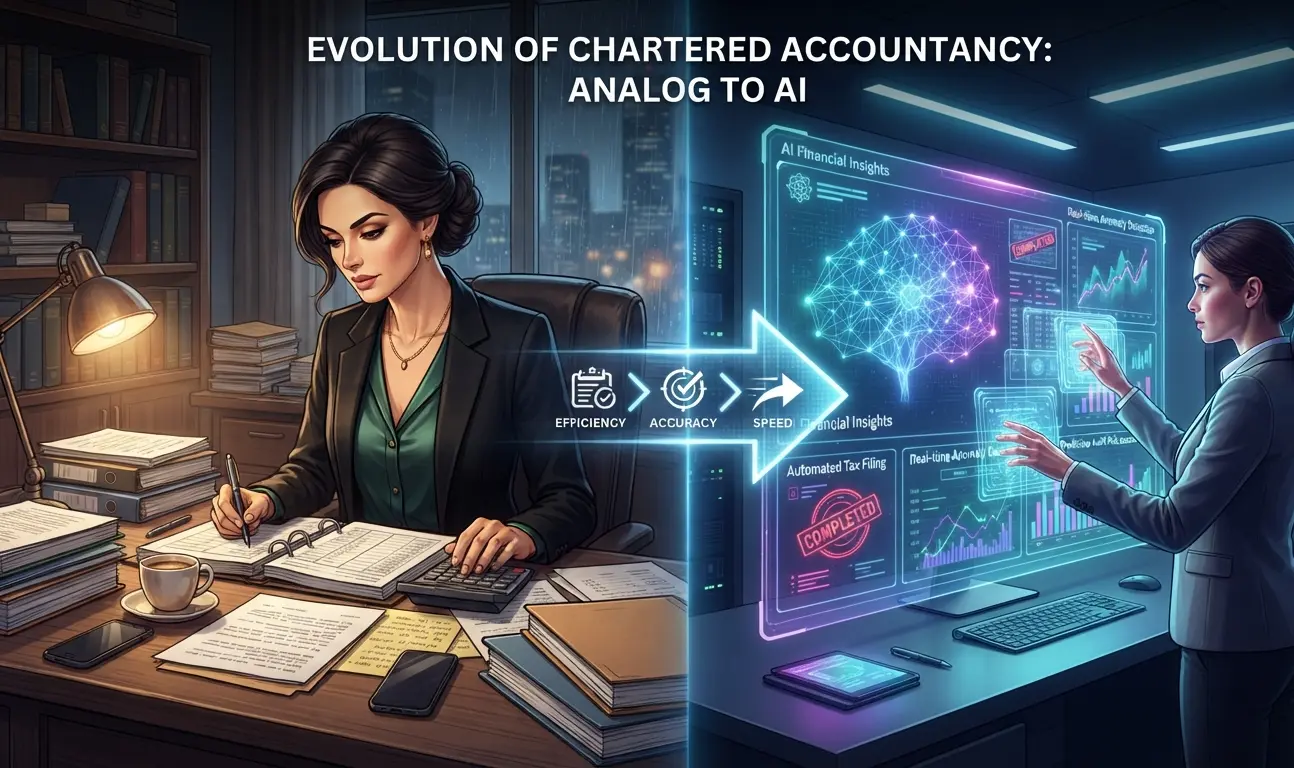
I’ll be honest about this, because pretending otherwise is how professionals get blindsided. AI has genuinely taken over a real portion of what I used to do manually. Data entry and extraction from invoices and statements — largely automated. First-pass bank reconciliation and ledger flux review — AI drafts it in minutes, where it used to take hours. Standard disclosure notes drafted from prior-period templates — a first draft in seconds. Summarising a long contract or agreement to find the relevant clauses — faster than any human read.
What these tasks have in common is that they’re high-volume and low-judgement: the answer is largely determined once the inputs are fixed. That’s exactly the territory where AI is strong, and pretending it isn’t just makes you slower and more expensive than the CA next door who’s using it.
Pro tip
If most of your billable time is spent on the tasks in this section, that’s not a reason to fear AI — it’s a signal to adopt it fast and redirect the freed time toward the work in the next section, before a competitor does it first.
What AI structurally cannot do
Here’s the other half, and it’s the more important one. There are parts of a CA’s work AI cannot do — not “cannot do yet,” but cannot do structurally, because of what they are.
It cannot hold accountability. When a CA signs an audit report or a return, they take on legal and professional responsibility for it. AI cannot bear that responsibility — a tool cannot be sanctioned, cannot appear before a disciplinary body, cannot stake a reputation. Accountability is not a feature that improves with a better model; it’s a human and legal construct.
It cannot exercise genuine judgement on ambiguous facts. Real client situations are messy and specific. Deciding whether a transaction’s substance matches its form, whether an estimate is reasonable given a client’s actual business, whether an aggressive tax position is defensible — these require weighing facts AI doesn’t have and interpreting them against consequences AI doesn’t bear.
It cannot hold the relationship. Much of what clients actually pay a CA for is trust — someone who understands their business, whom they can call before a big decision, who will tell them the uncomfortable truth. That relationship is the real product, and it can’t be automated.
ROLE
CORE
The part that was never about the tasks
Clients don’t ultimately pay a CA to reconcile a ledger — they pay for the assurance that comes from a qualified professional standing behind the numbers. AI can produce the numbers. It cannot stand behind them. That distinction is the whole profession.

The automate-vs-judgement framework
To make this practical rather than philosophical, here’s the framework I actually use to decide what to hand to AI and what to keep. Run any task through this split before you decide whether AI belongs anywhere near it.
| Task | Safe to automate with AI? | Why |
|---|---|---|
| Data entry & extraction | Yes — with review | Mechanical, verifiable against source |
| First-pass reconciliation | Yes — with review | AI drafts, human confirms exceptions |
| Drafting standard disclosures | Yes — with review | Template-driven, fixed inputs |
| Interpreting an ambiguous tax position | No | Judgement on facts AI doesn’t hold |
| Estimates & assumptions (fair value, ECL) | No | Requires professional judgement |
| Signing an audit report or return | No — never | Legal accountability sits with the CA |
| Advising a client on a strategic decision | No | Rests on trust, context, relationship |
The pattern is consistent: everything in the “yes” column is mechanical and verifiable; everything in the “no” column involves judgement, accountability, or relationship. That line is stable, and it’s the map for where a CA’s time should move.

The honest verdict
So — can AI replace a chartered accountant? No. But it will absolutely replace a version of the CA who does nothing but the automatable tasks, because a competitor using AI will do that same work faster and cheaper. The profession isn’t disappearing; it’s moving up the value chain, from doing the work to judging it, from compliance to advisory, from producing numbers to standing behind them. That shift is uncomfortable for anyone whose practice is built on volume, and it’s a genuine opportunity for anyone willing to reinvest the time AI frees into the judgement work that was always the real job.
The future of the CA profession, then, isn’t a story of replacement at all — it’s a story of redefinition. The title stays; what it’s understood to mean shifts toward exactly the judgement, accountability, and advisory work that made it a respected profession in the first place.
AI Won’t Take Your Seat. But the CA Who Uses It Might.
The threat to a Chartered Accountant was never artificial intelligence — it’s another CA who has learned to use it. AI has already taken half of the mechanical work off my desk, and the honest result is that I’m more valuable now, not less, because my time goes where judgement and accountability are actually required. Let AI do the work that was never really the job. Keep, and sharpen, the part that always was. That’s not a defensive strategy against being replaced — it’s how you become the professional clients can’t do without.
Can AI Replace a CA: Questions I Get Asked
Can AI replace a Chartered Accountant?
Which CA tasks can AI actually automate?
Which parts of a CA’s work can AI not do?
Will AI reduce the demand for Chartered Accountants?
Should a CA be worried about AI taking their job?