

Introduction
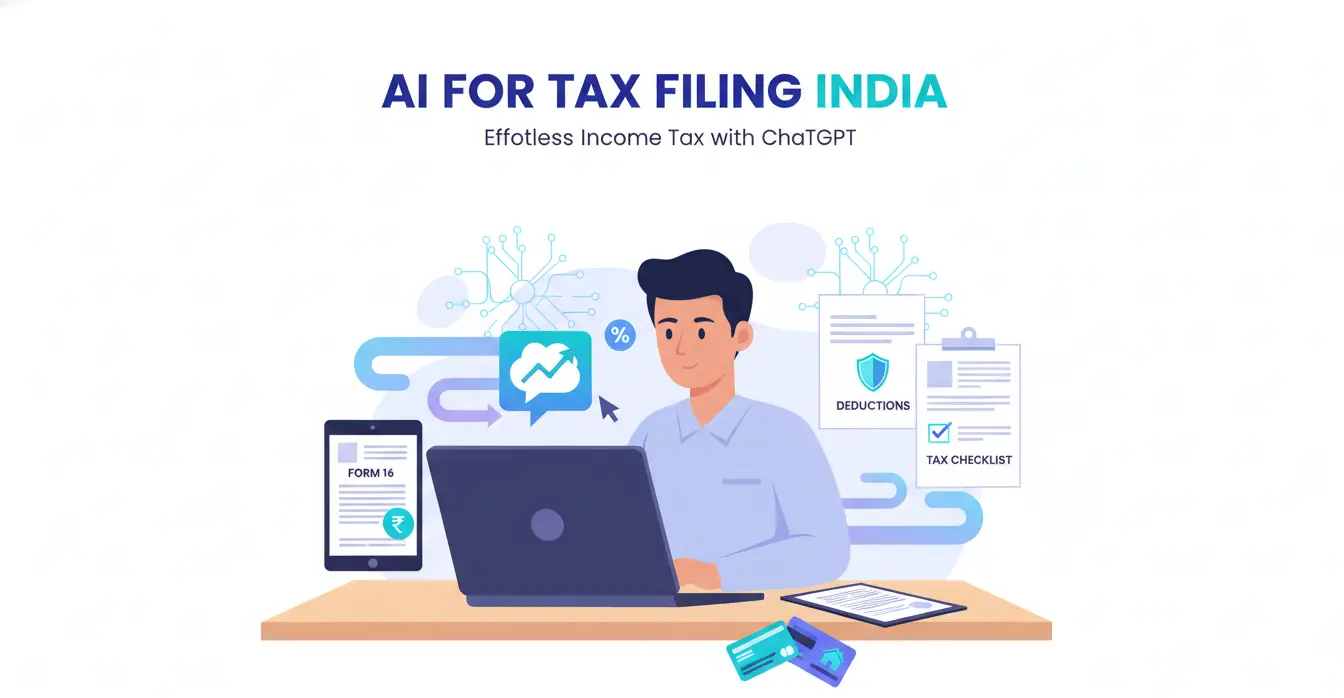
ChatGPT for Income Tax Filing in India is becoming increasingly popular among taxpayers who want to simplify the ITR filing process and reduce confusion during tax season. Many salaried individuals and freelancers struggle with Form 16, AIS, Form 26AS, deduction proofs, capital gains statements, and multiple income sources while preparing their income tax return. Even small reporting mistakes can create filing mismatches, delayed refunds, or compliance issues later.
This is where AI tools for income tax filing are changing the workflow for taxpayers. Instead of spending hours searching through websites or watching lengthy videos, users are now using AI for ITR filing, deduction summaries, tax checklists, and document understanding to save time and improve filing efficiency. With properly written prompts, tools like ChatGPT can help taxpayers organise financial information, understand tax terminology, and improve the overall tax filing workflow before submission.
However, ChatGPT for tax filing should not be treated as a replacement for verification or professional judgement. AI-generated responses may still contain outdated interpretations or incomplete assumptions if prompts are unclear or financial details are missing.
This guide explains how taxpayers can use AI tools more effectively during the ITR filing process, practical ChatGPT prompts for income tax filing, and the important limitations taxpayers should still verify manually before filing their returns.
Why Taxpayers Should Use AI for ITR Filing
The biggest advantage of using AI for ITR filing is speed, clarity, and better organisation during the tax filing process. Many taxpayers spend hours understanding tax terminology, identifying required documents, checking deductions, or verifying whether important information is missing before filing their income tax return. AI tools like ChatGPT can simplify these repetitive tasks and make the overall income tax filing workflow more structured and easier to manage.
Instead of manually searching through multiple blogs, videos, or tax forums, taxpayers can use ChatGPT for tax filing assistance to:
- create ITR filing checklists,
- understand Form 16 entries,
- organise deductions and investments,
- identify missing information,
- and prepare questions before filing returns.
This becomes especially useful for salaried employees, freelancers, first-time filers, and taxpayers managing multiple investments or deductions.
Another major benefit of AI tools for income tax filing is faster information processing. Taxpayers can summarise financial details and ask AI to explain tax concepts in simple language. Properly written prompts can also help users understand deduction categories, organise tax documents, and improve filing preparedness before submission.
However, taxpayers should treat AI as a productivity assistant rather than a final authority. AI for tax workflows works best when prompts are detailed, financial information is accurate, and outputs are verified carefully before filing.
Understanding the benefits of AI is important, but taxpayers should also know where AI tools can practically assist during the ITR filing workflow.

How AI Can Help During Income Tax Filing
The biggest advantage of using AI for income tax filing is that it can simplify repetitive and information-heavy parts of the ITR filing process. Many taxpayers spend significant time understanding tax documents, identifying deductions, organising investment details, and checking whether important information is missing before filing their return. AI tools like ChatGPT can help reduce this confusion and make the overall tax filing workflow more structured and efficient.
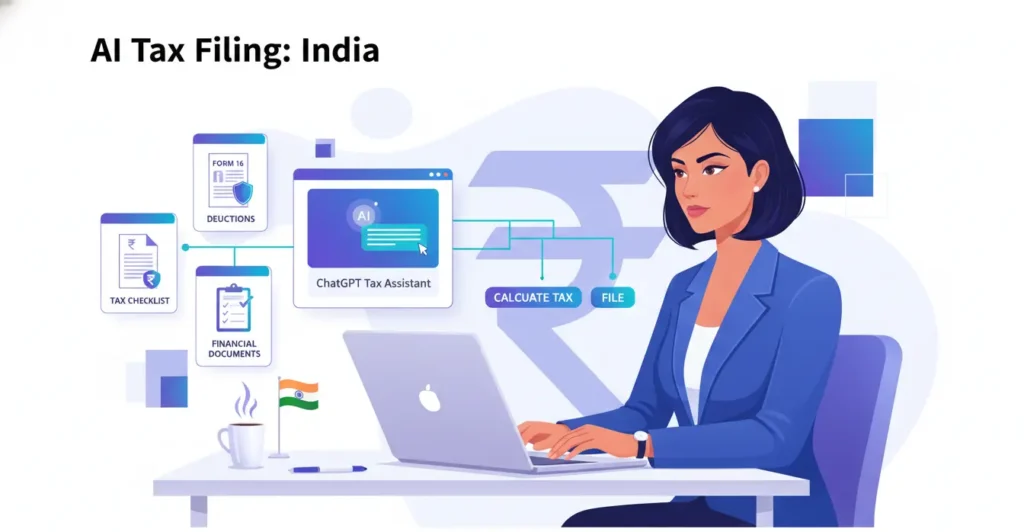
When used correctly, ChatGPT for income tax filing in India can assist taxpayers in several practical ways during tax season. Some of the most practical uses of AI during tax season include:
- Understanding Form 16, AIS, and Form 26AS in simpler language
- Creating customised ITR filing checklists based on income sources
- Organising deductions and tax-saving investment information
- Identifying common filing mistakes before submission
- Explaining tax terminology and compliance-related concepts faster
- Helping taxpayers prepare information before using the income tax portal
Another important benefit of AI tools for income tax filing is faster research and information processing. Instead of reading multiple articles or watching long videos, taxpayers can ask direct questions and receive structured responses within seconds. This becomes especially useful for salaried employees, freelancers, and first-time filers who may not be familiar with the complete filing workflow.
However, AI for ITR filing works best as a productivity assistant rather than a final authority. Taxpayers should still verify deductions, disclosures, and filing details carefully before submitting their income tax return.
4 Useful AI Prompts for Faster ITR Filing
Well-structured prompts help AI tools provide more relevant and practical guidance during the ITR filing process. When using ChatGPT for Income Tax Filing India, taxpayers should clearly mention income sources, deductions, financial year, and expected output for better results.
Below are some practical ChatGPT prompts for ITR filing that can help taxpayers organise information, understand tax documents, and simplify the overall tax filing workflow.
AI Prompt for ITR Filing Checklist
AI Prompt to Understand Form 16
AI Prompt for AIS & Form 26AS Checks
AI Prompt for Organising Tax Deductions
How to Use AI Prompts Effectively for Better Tax Answers
The usefulness of ChatGPT for Income Tax Filing in India depends heavily on how taxpayers write prompts and provide financial information. Generic questions often produce broad or incomplete answers, while structured prompts help AI tools generate more relevant and practical guidance during the ITR filing process.
For example, asking:
“Help me with tax filing”
will usually produce very generic guidance. However, a detailed prompt mentioning salary income, deductions, home loan, investments, and financial year can generate much more practical and workflow-focused responses.
To improve the quality of AI for ITR filing responses, taxpayers should clearly mention:
- income sources,
- deductions,
- financial year,
- investment details,
- and the exact output expected from the AI tool.
Adding proper context helps AI understand the workflow more accurately and reduces vague or incomplete responses.
Follow-up questions can further improve AI-generated tax guidance. Taxpayers can ask questions like:
- “Explain this in simpler language”
- “What documents are required?”
- “What should be verified before filing?”
- “Create this in checklist format”
Breaking large tax queries into smaller tasks can also improve the accuracy and usefulness of AI tools for income tax filing.
What AI Still Cannot Do Reliably in Tax Filing
While AI for income tax filing can simplify repetitive tasks, taxpayers should understand that AI tools still have important limitations. ChatGPT can explain concepts and organise information, but it cannot independently verify live portal data, uploaded documents, or filing accuracy.
AI tools may also struggle with complex tax situations involving capital gains, foreign income, ESOP taxation, business income, or residential status. In some cases, AI-generated answers may:
- suggest outdated tax provisions,
- miss important disclosures,
- oversimplify deduction eligibility,
- or recommend an incorrect filing approach.
The best way to use ChatGPT for tax filing is as a productivity assistant rather than a final authority. Taxpayers should always verify important calculations, disclosures, and compliance requirements carefully before submitting their income tax return.

Frequently Asked Questions (FAQs)
Can ChatGPT file income tax returns automatically?
No. ChatGPT for Income Tax Filing in India can help taxpayers understand documents, create checklists, organise deductions, and simplify tax workflows, but it cannot directly file ITRs on the income tax portal automatically.
Is AI accurate for income tax filing?
AI for ITR filing can provide useful guidance, but the accuracy depends heavily on the quality of prompts and financial information shared by the user. Taxpayers should always verify deductions, disclosures, and calculations before final submission.
Which AI tools can help during ITR filing?
Popular AI tools for income tax filing include ChatGPT, Gemini, Claude, and Perplexity. These tools can assist with tax research, document understanding, deduction organisation, and tax workflow preparation.
Can AI help understand Form 16 and AIS?
Yes. AI tools can explain Form 16, AIS, and Form 26AS in simpler language and help taxpayers identify important entries before filing their income tax return.
What type of tax questions should not rely only on AI?
Complex tax situations involving capital gains, foreign income, ESOP taxation, business income, or residential status should not rely entirely on AI-generated guidance. These cases often require professional review and compliance verification.
How can taxpayers get better answers from AI tools?
Taxpayers should use clear and structured prompts by mentioning income sources, deductions, financial year, and expected output. Asking follow-up questions can also improve the quality of AI-generated tax guidance.
Should taxpayers upload sensitive financial documents to AI tools?
Taxpayers should avoid sharing highly sensitive personal information like PAN, Aadhaar, bank account numbers, passwords, or confidential financial data directly with AI tools unless proper privacy safeguards are understood.
Final Takeaway
ChatGPT for Income Tax Filing India can significantly simplify the tax filing workflow when used correctly. From understanding Form 16 and organising deductions to creating filing checklists and improving tax research, AI tools can help taxpayers save time and reduce confusion during the ITR filing process.
However, AI for income tax filing works best as a productivity assistant rather than a replacement for professional judgement or compliance verification. Taxpayers who use structured prompts, accurate financial details, and proper verification can use AI tools more effectively during the income tax filing process.
Taxpayers who combine effective prompting with careful verification can use AI tools for income tax filing more efficiently and make the overall tax preparation process faster, more organised, and easier to manage.
Disclaimer: This article is for educational purposes only and should not be treated as professional tax advice. Always verify tax calculations and compliance details before filing your income tax return.